
Health Integration for Pumping Mothers
Apple Health integration means your pumping sessions become part of your complete health record. We use the lactation datapoint in Apple Health to keep your exclusive pumping journey connected with your overall wellness.


What is Apple Health Integration?
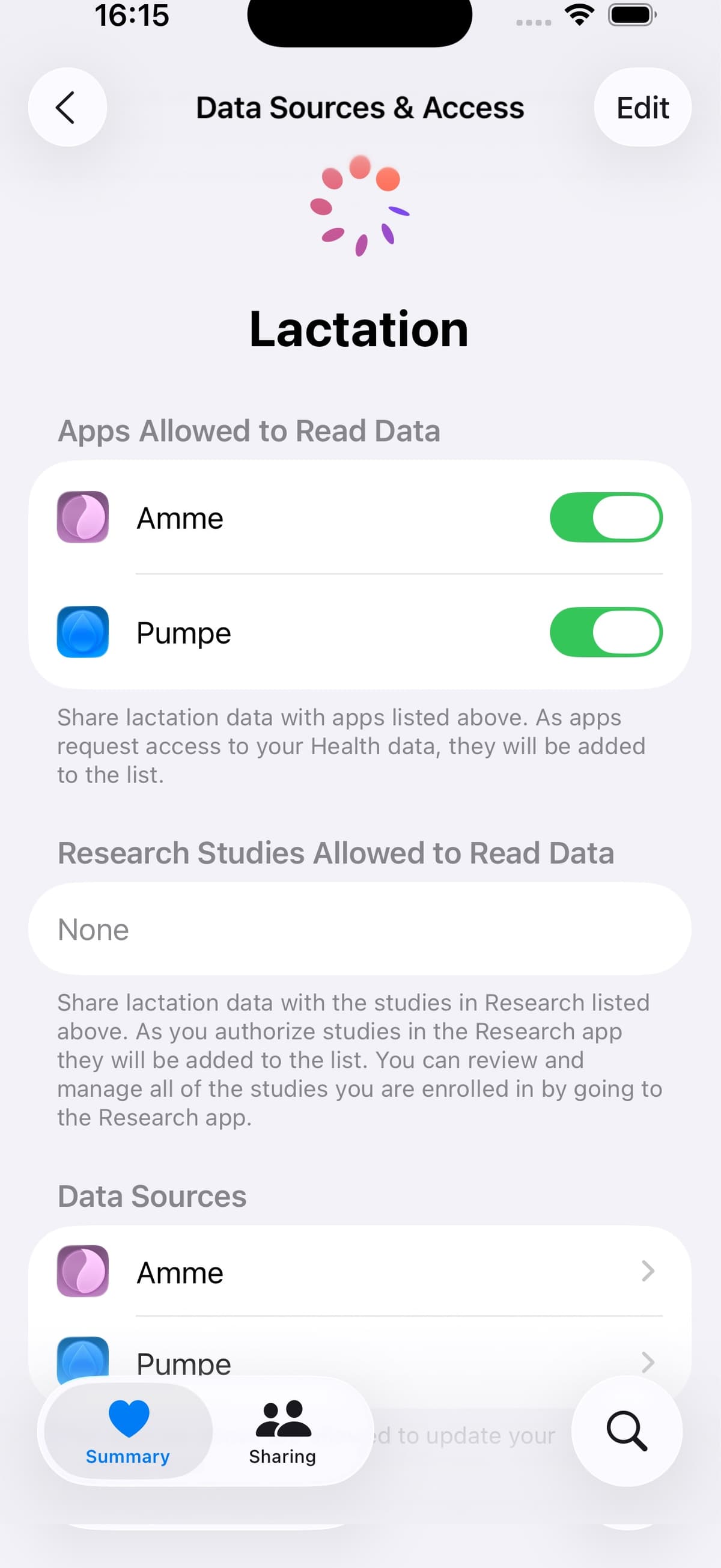
Using Pumpe with the Apple Health app on iPhone empowers you to better manage your health. Your pumping sessions and milk expression data automatically sync with Apple Health, creating a comprehensive picture of your postpartum health and lactation journey.
Pumpe uses Apple Health's lactation datapoint to record every pumping session—volume expressed, duration, and timing. This standardized health data can be shared with your lactation consultant or healthcare provider, synced across your devices, and kept secure with the same encryption that protects all your health information.
Why Integrate with Apple Health?
Complete Health Picture
Your pumping data lives alongside your other health metrics like sleep, nutrition, and activity, giving you and your healthcare team a holistic view of your milk supply and postpartum recovery.
Secure & Private
All data synced to Apple Health is encrypted and protected by your iPhone passcode and Face ID. Your pumping information stays under your control, always. No accounts, no cloud servers, just local security.
Track Your Supply Over Time
Apple Health stores your complete pumping history, allowing you to track milk supply trends, identify patterns, and monitor your progress as an exclusive pumper over weeks and months.
Empowering Data Insights
See how your pumping output correlates with sleep, hydration, nutrition, and other health metrics tracked in Apple Health. Understand what factors support your milk production.
Your Privacy is Protected
When you enable Apple Health integration, your pumping data is encrypted and stored securely on your device. Pumpe never sends your personal information to external servers. You're in complete control of which apps can access your health data through iPhone's privacy settings.
How to Enable Apple Health Integration
Open Pumpe and go to Settings
Tap 'Apple Health Integration' and enable sync
Grant Pumpe permission to read and write lactation data in the Apple Health permissions dialog
Calm guidance
Featured guides
Gentle, sourced reading for nursing and pumping — by your side for the moments that need it most.
How to Use a Breast Pump: Types, Flange Fit, and Pumping Tips
A complete guide to using a breast pump well — choosing the right type, flange fit, encouraging letdown, a schedule that works, and troubleshooting.
Read moreStoring Breast Milk: How Long It Lasts and How to Handle It Safely
How long breast milk keeps at room temperature, in the fridge, and frozen — plus safe thawing, container choice, and when to discard. WHO/NHS/CDC.
Read morePumping at Work: A Calm, Practical Guide
Your legal rights, how often to pump, protect your supply, and return to work calmly — evidence-based guidance from the CDC, NHS, and La Leche League.
Read more
Knowledgebase
Gentle, sourced reading for nursing and pumping — by your side for the moments that need it most.
Featured guides
Pumping
Hand Expression: How to Express Breast Milk by Hand
How to hand express breast milk — Marmet technique, colostrum collection, engorgement relief, and hands-on pumping. No equipment needed.
Read moreNursing
Starting to Nurse: First Latch, Hunger Cues, and What to Expect
A practical guide to starting breastfeeding — first skin-to-skin, deep latch, early hunger cues, what colostrum does, and how often newborns feed.
Read moreBottle feeding
Paced Bottle Feeding: A Step-by-Step Guide for Newborns
Step-by-step paced bottle feeding for newborns — prevent overfeeding, ease reflux, and protect breastfeeding. Backed by NHS, UNICEF, and AAP guidance.
Read morePumping
How to Use a Breast Pump: Types, Flange Fit, and Pumping Tips
A complete guide to using a breast pump well — choosing the right type, flange fit, encouraging letdown, a schedule that works, and troubleshooting.
Read more
By your side for every session
Download Pumpe and let it keep your plan on track.